Why cities lead live events: 10 reasons that matter
Date added: 11/07/2026

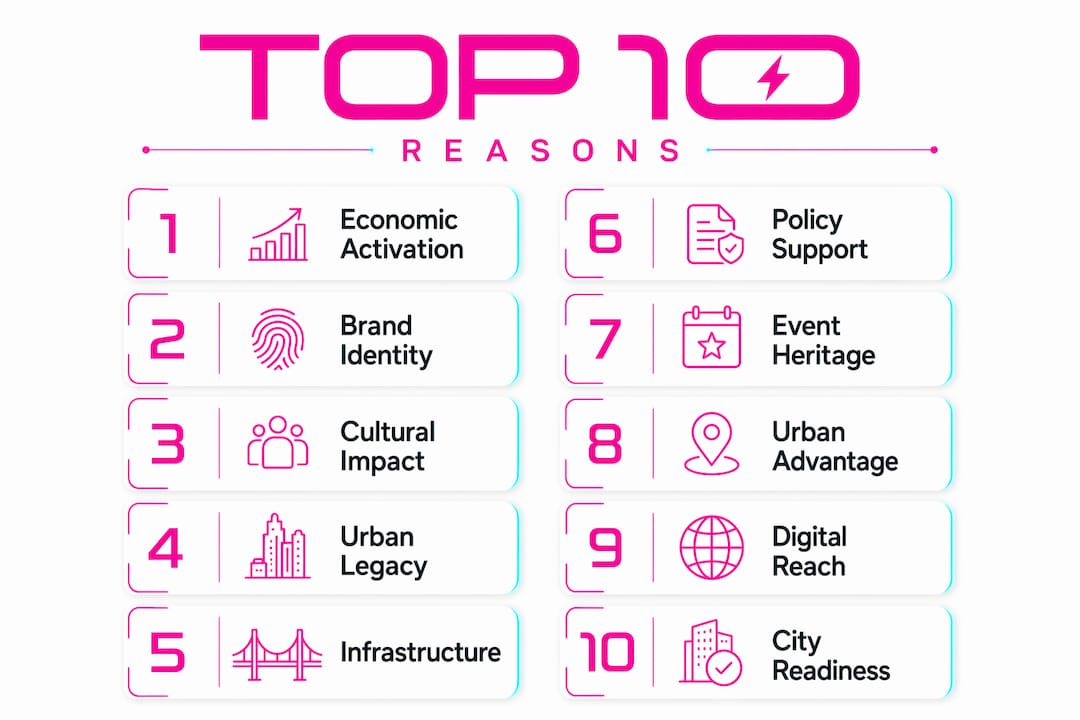
Cities dominate live event hosting for reasons that go far beyond having a big venue. The combination of economic firepower, cultural depth, transport links, and governance structures gives urban centres a structural advantage that rural or suburban locations simply cannot replicate. Here is what actually drives that advantage:
- Economic activation: events pull spending across hotels, restaurants, transport, and retail simultaneously
- Reputation and branding: flagship events reshape how a city is perceived globally
- Cultural richness: urban diversity creates audiences and performers that make events resonate
- Infrastructure: cities already have the venues, roads, and technical capacity in place
- Policy support: local authorities actively fund and facilitate event programmes
- Legacy planning: the best cities treat events as long-term urban development tools
1. Why cities lead live events economically
Live events do not just fill seats. They activate entire city economies in a matter of hours. Hotels, taxis, restaurants, florists, photographers, and retail businesses all see a lift the moment a well-produced event lands in a city. The ripple effect of a single corporate retreat or concert can touch dozens of local businesses simultaneously, connecting guests with services they would never have discovered otherwise.
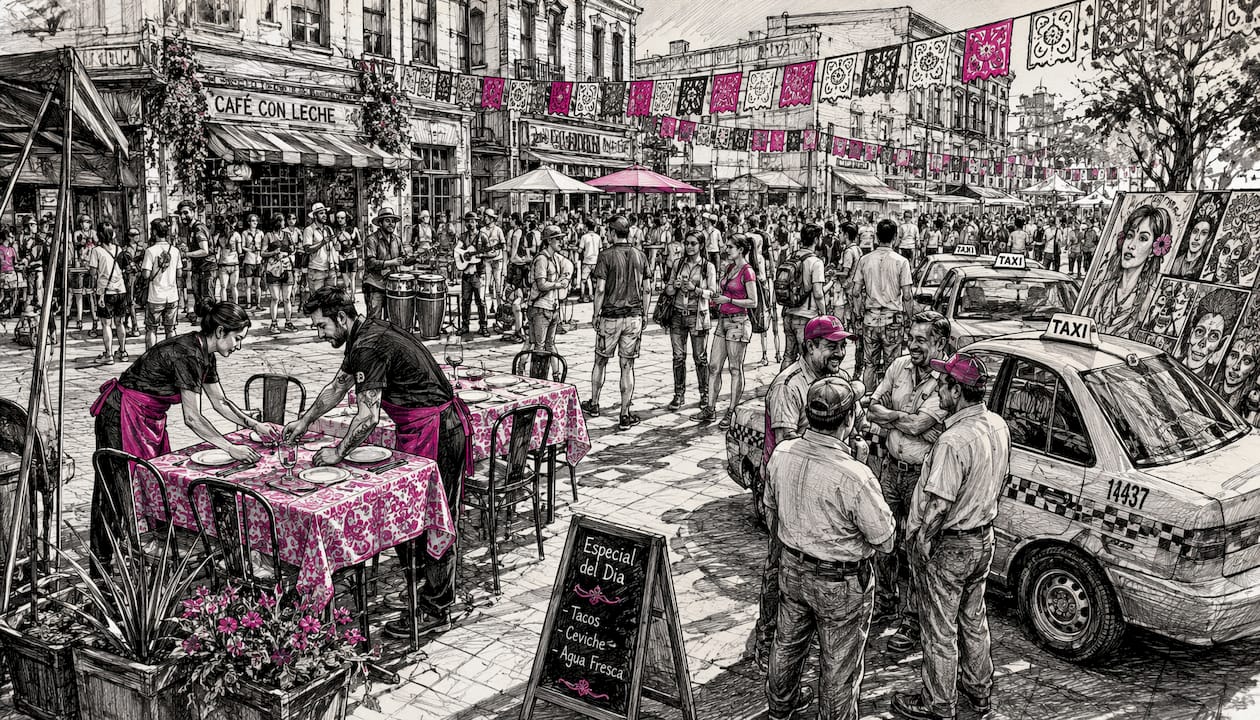
Experiential event companies now function as genuine hospitality anchors in cities, driving tourism and creating jobs without requiring the kind of infrastructure expansion that costs councils millions. That is a compelling proposition for city planners working with constrained budgets.
Key economic drivers that cities unlock through live events:
- Visitor spending across accommodation, food, and transport
- Job creation in technical production, hospitality, and logistics
- Business exposure for local traders introduced to new audiences
- Tax revenue generated by increased commercial activity
2. How live events build city reputation and brand identity
Toronto’s Luminato Festival is one of the clearest examples of an event reshaping a city’s global standing. Launched in 2007 after the SARS epidemic had left the city’s tourism economy in ruins, it now attracts over one million visitors annually and generates over $210 million in economic impact. That is not just a cultural success. It is a branding operation that repositioned Toronto as a world-class cultural destination.
Washington D.C.'s National Cherry Blossom Festival drew a very large number of visitors recently, generating substantial economic impact for the region. Events like these succeed because they reflect something authentic about the place. They cannot be lifted and dropped into another city without losing what makes them work.
Cities that invest in place-led events gain:
- International visibility through media coverage and global audiences
- Cultural tourism from visitors who return year after year
- Business attraction as a reputation for creativity draws investment
- Resident pride that strengthens civic identity
Pro Tip: When a city creates an event rooted in its own history or geography, it builds something competitors cannot copy. Edinburgh’s Hogmanay works because it is inseparable from the city’s streets, winter setting, and shared rituals.
3. Cultural and communal impact of live events in urban settings
The social value of live events is better understood now than it was even five years ago. University at Buffalo research involving 789 participants found that collective effervescence, the shared sense of connection felt in a crowd during a live performance, consistently predicted positive well-being outcomes. Crucially, those effects did not end when the music stopped. They lingered for up to a week afterwards.
Cities are where this effect scales. Urban diversity means audiences at live events span different ages, backgrounds, and cultures, creating the kind of cross-community contact that combats loneliness and builds social cohesion. A concert in a city of one million people draws a crowd that a market town simply cannot assemble.
Urban live events also create what sociologists call a “third place,” a space away from home and work where social identity can be explored freely. For cities with high rates of social isolation, that function is not trivial.
- Collective effervescence builds lasting well-being beyond the event itself
- Cross-cultural mixing strengthens community bonds across demographics
- Third-place experiences offer social connection outside everyday routines
- Shared memory created by events reinforces long-term community identity
4. Legacy planning and urban development linked to live events
The OECD’s analysis of more than 30 global host cities makes the point plainly: the largest value of hosting a major event lies not in the event itself but in what comes after. Improved transport links, regenerated neighbourhoods, new public spaces, and heightened civic pride are the real prizes. None of that happens without deliberate legacy planning built into the event strategy from the start.
Cities increasingly use a practice sometimes called “eventification,” positioning festivals and events in under-used or derelict areas to attract investment and improve infrastructure. The event becomes the catalyst; the neighbourhood transformation is the goal.
| Legacy benefit | How events deliver it |
|---|---|
| Infrastructure improvement | Transport and venue upgrades built for events serve residents long-term |
| Neighbourhood regeneration | Events in derelict areas attract developers and new businesses |
| Job creation | Production, hospitality, and logistics roles outlast the event itself |
| Civic pride | Successful events raise community confidence and identity |
| Global reputation | International coverage positions the city for future investment |
Pro Tip: Cities that integrate event planning into their spatial development strategies, rather than treating events as one-off occasions, consistently extract more long-term value from the same investment.
5. How city infrastructure gives urban venues the edge
A city’s existing infrastructure is not just convenient. It is a competitive advantage that takes decades to build and cannot be improvised. Major urban centres have transport networks that move tens of thousands of people efficiently, accommodation stock that can absorb large visiting audiences, and technical venue facilities that meet the demands of complex productions.
Regional cities with advanced stage technology and extended fit-up periods allow productions to de-risk launches through progressive audience testing before wider rollouts. That is why producers often favour launching major tours in regional urban centres rather than capitals. Lower venue costs, less competition for audience attention, and quality technical facilities make the numbers work. The AV technology underpinning modern live events, from LED walls to line array sound systems, requires the kind of power infrastructure and rigging capacity that cities have built into their venues as standard.
Cities also offer something less obvious: a concentration of skilled technical labour. Sound engineers, lighting designers, riggers, and production managers cluster in urban centres because that is where the work is. For a complex live show, having that workforce within reach is not a minor convenience.
6. How city policies and governance shape live event success
Cities that lead in live events rarely do so by accident. Local authorities in the UK, from Manchester City Council to the Greater London Authority, actively fund event programmes, streamline licensing, and create dedicated event offices that reduce the friction of putting on a show. That institutional support is a genuine differentiator.
Cultural policy frameworks matter too. Cities that embed live events into their broader cultural strategies, treating them as infrastructure rather than entertainment, attract more investment and more ambitious productions. The spatial value of live music is increasingly recognised in urban planning, with policymakers using financial instruments, noise mitigation measures, and special venue designations to protect and grow live event ecosystems.
Events and festivals have also emerged as tools for projecting soft power and symbolic capital, which gives city governments a direct political incentive to support them. When a city hosts a globally recognised event, it signals reliability, creativity, and ambition to investors and visitors alike.
7. How cities built their live event heritage over centuries
Cities have been the natural home of public gathering since ancient Athens and Rome. Markets, theatres, amphitheatres, and public squares were urban inventions, and the tradition of concentrated cultural life in cities has compounded over centuries. London’s West End, Edinburgh’s festival circuit, and Manchester’s music scene did not emerge from nowhere. They are the product of layered investment, accumulated reputation, and generations of creative talent choosing to base themselves where the audiences already were.
That historical depth gives cities a credibility that newer or smaller venues struggle to match. When an artist plays the Royal Albert Hall or a conference lands at the ExCeL London, the venue’s history is part of the product. The legacy of past events raises the perceived value of future ones.
8. Why urban events outperform rural ones in most conditions
The gap between urban and non-urban event hosting is real, though not absolute. Rural festivals like Glastonbury prove that extraordinary events can happen outside cities. But Glastonbury is the exception that proves the rule: it requires years of infrastructure investment, a dedicated transport operation, and a brand built over five decades.
For most events, cities win on logistics alone. Audiences can arrive by train, tube, or bus without the organisers building temporary car parks. Suppliers are nearby. Accommodation is plentiful. The economic activation that makes events financially viable for host cities depends on that density of existing businesses.
Non-metro cities in India, such as Lucknow and Kochi, saw live event ticket sales surge over 225% in 2023, driven by civic pride and a sense that the event was a statement about the city’s identity. That finding does not undermine the urban advantage. It reinforces it: even the growth story in non-metro markets is fundamentally an urban story, driven by cities, not countryside.
9. How digital technology extends city event reach
Cities increasingly use digital infrastructure to amplify live events beyond the venue walls. Digital screens in tourist areas extend event promotion into streets, transport hubs, and hospitality districts, turning the whole city into a backdrop for the event experience. That ambient promotion drives footfall to local businesses and builds anticipation in ways that a standalone venue cannot replicate.
The LED screen technology now standard at major urban events also changes the scale of what is possible. Audiences of 20,000 can follow a performance with the same clarity as someone in the front row. Cities with the power infrastructure and technical expertise to support that kind of production attract the events that demand it.
10. What makes a city genuinely ready to lead live events
Readiness is not just about having a big arena. The cities that consistently lead live events share a specific combination of qualities: a clear cultural identity that events can reflect, governance structures that reduce production friction, transport networks that handle large crowds, and a technical workforce that can deliver complex shows reliably.
The concert AV production demands of a modern live event, from broadcast-quality video switching to immersive spatial audio, require cities to have invested in both physical infrastructure and skilled technical capacity. Cities that have done that work attract the productions that define a city’s live event reputation for years.
Cities lead live events because economic density, cultural depth, infrastructure, and governance advantages compound together in ways that no single factor can explain alone.
| Point | Details |
|---|---|
| Economic activation | Live events simultaneously engage hotels, transport, retail, and hospitality across the whole city. |
| Reputation building | Flagship events like Toronto’s Luminato generate over $210 million in economic impact and reshape global perception. |
| Cultural well-being | Research confirms collective effervescence from live events boosts well-being for up to a week after attendance. |
| Legacy planning | OECD analysis of 30-plus host cities shows infrastructure and civic pride gains require deliberate legacy strategy. |
| Infrastructure advantage | Cities offer transport networks, technical venues, and skilled AV workforces that rural locations cannot match. |
Planning a live event in a UK city? Fireflyav supplies AV equipment and technical support for corporate, cultural, broadcast, and live event productions across the country. Whether you need LED walls, conference microphone systems, or full production support, the team at Fireflyav has the expertise to make it work.