What is a followspot operator on a live show?
Date added: 2/08/2026
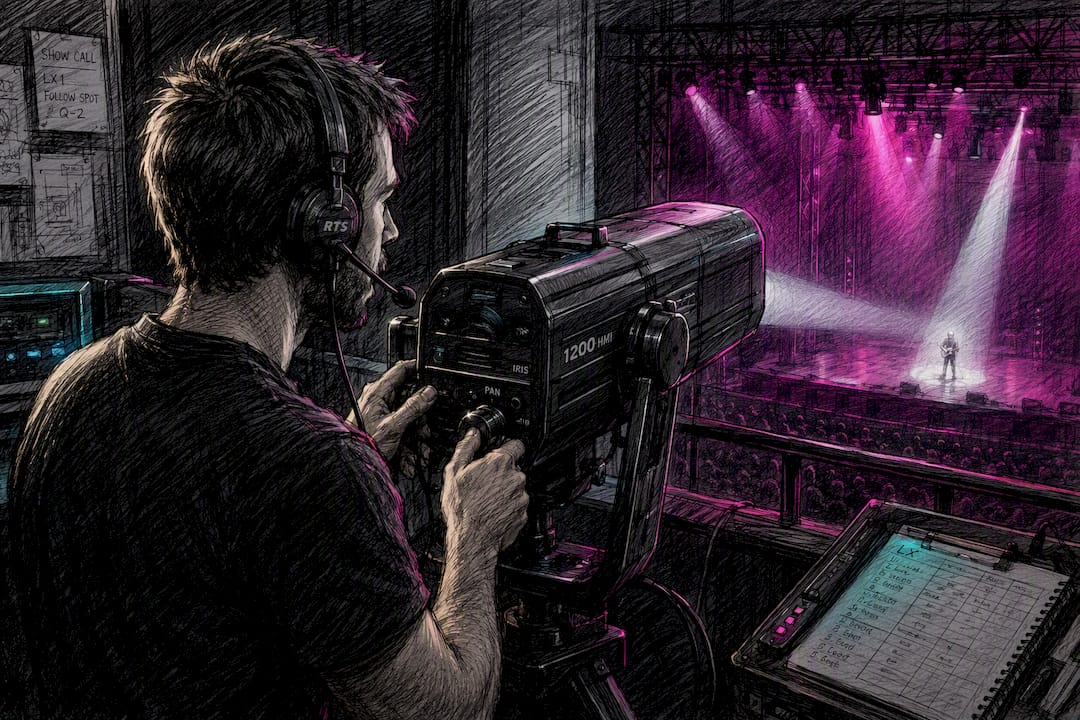
A followspot operator is the technician who manually steers a powerful stage light to track a performer, keeping their face lit as they move across a stage, arena or set. It’s a hands-on, judgement-heavy job that sits apart from the automated lighting rig around it. Firefly AV is an AV hire and event production company based in Leeds and Preston, working across the UK, and we supply both the equipment and the crew who run it, including followspot operators for theatre, corporate and broadcast work.
The role is well documented in the industry. Wikipedia’s entry on the job describes a technician who pans, resizes and recolours the beam in real time, and the UK national occupational standard for operating a follow spot sets out exactly what competence looks like, from plotting cues to logging faults. Recruitment packs from working theatres, including one from the Regent’s Park Open Air Theatre, spell out the daily reality of the job in plain terms.
Key Takeaways
A followspot operator manually tracks and lights performers using pan, iris, focus and colour controls, guided by a rehearsed cue sheet and headset communication with the lighting desk.
| Point | Details |
|---|---|
| Core definition | A followspot operator manually pans, resizes and recolours a beam to keep performers lit throughout a live show. |
| Cue sheets are essential | Comprehensive cue sheets let another technician cover the show if the regular operator is unavailable. |
| Face-first tracking | Experienced operators prioritise keeping the performer’s face lit over tracking limbs during fast movement. |
| Training route | The UK national occupational standard for operating a follow spot is the recognised competence benchmark. |
| Firefly AV staffing | Firefly AV supplies crewed followspot operators and full lighting crews for events across the UK, from Leeds and Preston outward. |
Table of Contents
- What does a followspot operator do during rehearsals and live shows?
- How does a followspot work? Controls, kit and setup
- What skills and training do followspot operators need?
- Health, safety and maintenance: what operators check
- How do you start operating a followspot well?
- Firefly AV perspective: how we staff and brief followspot operators
- Need a followspot operator or lighting crew for your event?
- Sources
- FAQ
What does a followspot operator do during rehearsals and live shows?
The job splits neatly into two phases. During rehearsals, the operator watches blocking, notes where performers move, and works with the lighting designer to plot cues against the script or score. During the run itself, that plotting has to become second nature, executed under time pressure with no room for guesswork.
Typical duties include:
- Tracking performers smoothly across the stage without jerky corrections
- Executing cues called by the lighting designer or stage manager, often over headset
- Writing and maintaining a cue sheet that records every colour, size and fade change
- Running pre-show checks on lamp, focus and headset function
- Making live adjustments when blocking shifts slightly night to night
A cue sheet entry might read something like “Cue 12: open to half-head, gel frame 2, 0.2s fade” — short, precise, and useless to anyone who hasn’t rehearsed it. That’s why comprehensive cue sheets are treated as mandatory professional practice: if the regular operator is off sick, someone else needs to run the show from paper alone.
Most cues are called live by the desk or stage management, but some productions hand the operator autonomy to interpret movement rather than wait for a call. Nederlander’s job description for the role makes clear that maintenance and record keeping sit alongside the on-stage work, not as an afterthought. Expect evening and weekend shifts as standard. Recruitment packs for touring and repertory theatre routinely list unsociable hours because that’s when the audience is in the seats.
How does a followspot work? Controls, kit and setup
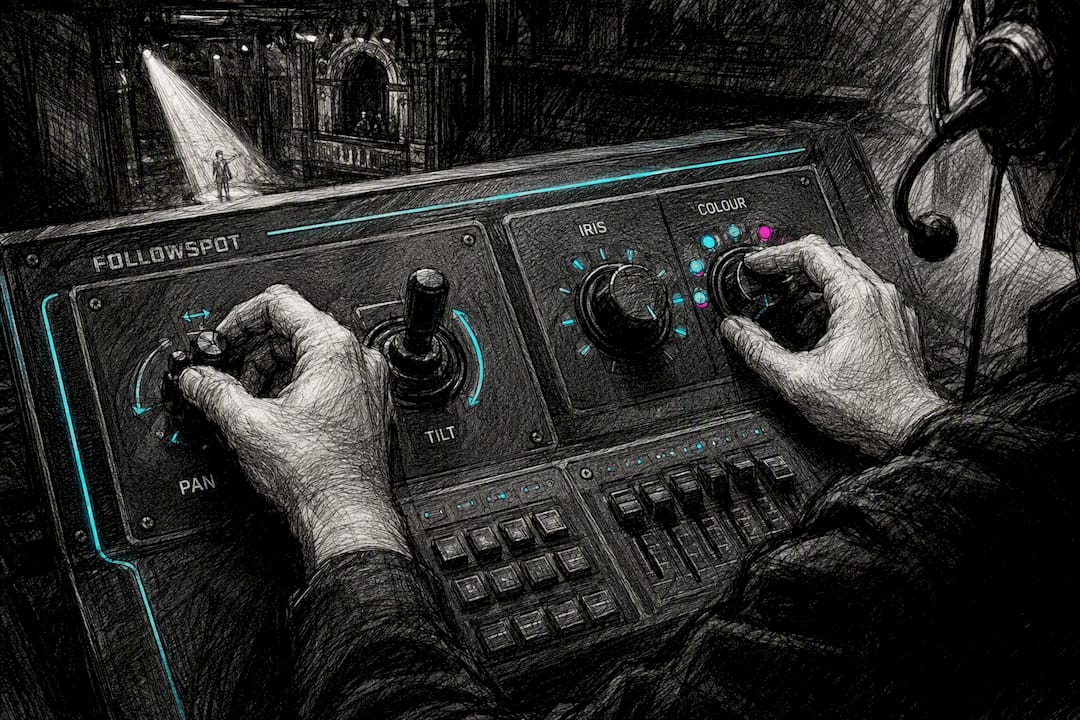
A followspot isn’t just a bright bulb pointed at a person. The operator controls several things at once: pan and tilt to follow movement, an iris or shutter to change beam size, focus to keep the edge crisp at varying distances, intensity to dim smoothly between cues, and a colour magazine or gel frame to shift the mood instantly. Doing all of this without looking jerky or hesitant is the actual skill.
Kit is usually rigged in a followspot gallery, catwalk or a rear-of-house position with a clear sightline to the stage. Common setups include:
- Xenon or LED-source followspots, chosen for output and colour consistency
- Gel frames or internal colour magazines for quick colour changes
- Iris and shutter mechanisms built into the housing
- A stable platform or tripod mount, often at height
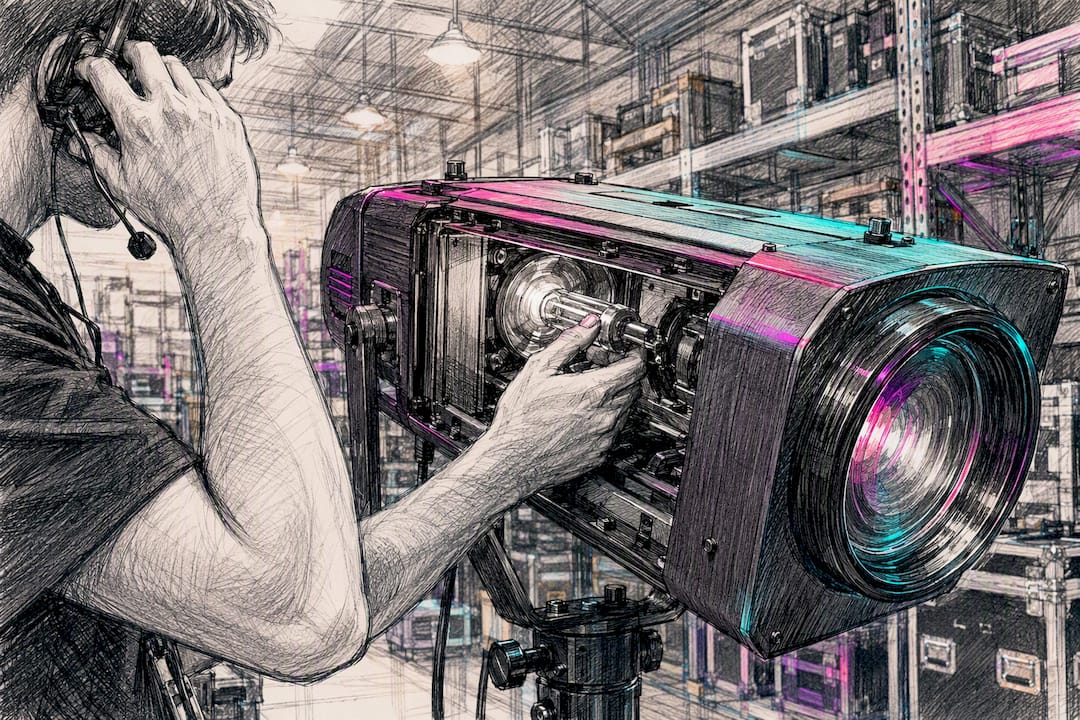
Pro Tip: Check the drag setting before the show, not during it. Over-tightening horizontal or vertical drag makes your movement jerky and obvious to the audience — you want just enough resistance for smooth, controlled tracking, not a stiff fight with the fixture. Some experienced operators also use a reflector sight, such as a Telrad, to map beam-ring sizes to fixed stage reference points, which keeps sizing consistent even at long throw distances. If you’re hiring gear alongside crew, our Stage Light 1 page gives a sense of the kind of stage lighting fixtures we supply as part of a wider rig.
What skills and training do followspot operators need?
Nobody walks into a followspot gallery and nails it on the first cue. It takes coordination, patience and a decent memory for a full running order.
The core skills worth building are:
- Hand and eye coordination for smooth, continuous tracking
- Sustained concentration across a two or three hour show
- Comfort working at height, often on a narrow gallery or catwalk
- Clear headset communication under time pressure
- Cue notation and basic fault logging
- Basic maintenance: lamp changes, lens cleaning
Most operators start through amateur dramatics, school or college technical theatre courses, or casual crew shifts at local venues before moving into paid work. The UK occupational standard for operating a follow spot is the benchmark worth referencing on a CV or job advert, since it defines competence in terms employers actually recognise. Bringing a sample cue sheet to an interview is one of the more effective ways to prove you understand the job rather than just describing it.
Rates vary by venue and experience. Day rates for freelance followspot operators in the UK typically sit in a broad band depending on production scale, union agreement and location, with West End and major touring shows at the top end and fringe or amateur venues considerably lower. Bodies like BECTU publish guidance rates for technical crew, and it’s worth checking current figures directly rather than relying on anecdote when quoting a job.
Health, safety and maintenance: what operators check
Most of a followspot operator’s safety responsibility comes down to routine, boring checks done consistently, not dramatic intervention. A pre-show walk-through should cover:
- Lamp condition and expected working life for the run
- Lens and optics free of dust or smudging
- Power isolation confirmed before any bulb change
- Rig security, mounting bolts and gallery railings
- Headset function tested with the desk
- Spare bulbs and fuses on hand
Working at height is part of the job description, whether that’s a catwalk, a rear gallery or a temporary tower rig, and the UK national occupational standard explicitly requires operators to follow safe backup procedures if something fails mid-show. Always isolate power before touching a lamp or fitting, and follow the venue’s own health and safety protocol rather than assuming your usual routine applies. If a lamp fails during a run, the priority is a fallback cue (often a static wash from house lighting) and an immediate flag to the lighting desk, not an attempt to fix it live.
How do you start operating a followspot well?
Getting good at this job is mostly about repetition under low stakes before you’re trusted with high ones.
- Watch a few rehearsals from the gallery before touching the controls
- Practise pan, tilt and iris movements with no performer present
- Learn standard cue notation so you can read someone else’s sheet
- Shadow an experienced operator through a full run
- Build your own cue sheet from scratch and get it checked
The most common beginner mistakes are over-tightening drag controls, chasing a moving limb instead of anchoring on the performer’s face, and scrappy note-taking that nobody else could follow. Practitioner accounts of the job consistently flag physical endurance as underestimated too; a three-hour show is a long time to hold a steady stance.
Pro Tip: Use a reflector sight during practice sessions and mark fixed reference points from your gallery position, wing lines, centre stage, key furniture marks, so your sizing stays consistent even when you can’t see the whole picture clearly. Keep your cue sheet legible enough that a colleague could pick it up cold and run the show.
Firefly AV perspective: how we staff and brief followspot operators
We hire and brief followspot operators for events across Leeds, Preston and further afield, and the checks stay consistent whatever the venue. Before doors, our crew run a kit checklist, hold a pre-show brief with the lighting designer, and confirm spare bulbs and headset comms are live. Followspot work rarely happens in isolation; it sits alongside the wider rig we supply, including Absen LED wall, Panasonic projectors, Sennheiser mics, Allen & Heath consoles, DB Technologies speakers and Lite Deck staging, all managed as one coordinated production rather than separate boxes ticked off a list.
Need a followspot operator or lighting crew for your event?
If you’re planning an awards night, conference or festival stage and need someone to run a followspot properly, that’s a crewing decision, not just an equipment order. Firefly AV supplies crewed followspot operation, full lighting crews, equipment hire and technical management for corporate and cultural events across the UK, working in conference centres, theatres, festival sites and awards venues.
Pricing runs on day rates or full production quotes depending on scope, so a single-night awards ceremony and a multi-day festival get priced differently rather than forced into one template. If you already know roughly what kit and crew you need, our equipment hire pages show what’s available to book alongside technicians. If you’re still working out the brief, our guide to AV equipment for event planners is a useful starting point before you get in touch to talk through dates and staffing.
Sources
- Followspot operator - Wikipedia
- Job Description Follow Spot Operator - Nederlander
- Recruitment pack Followspot operator - Regent’s Park Open Air Theatre
- Operate follow spot for theatre and live productions - UK occupational standard
- Followspot operator recruitment material - Bristol Old Vic
FAQ
What is a follow spot used for?
A follow spot is used to isolate and highlight a specific performer or object on stage, keeping the audience’s eye on them as they move, independent of the general stage wash.
What is the difference between a spotlight and a followspot?
A spotlight is often a fixed or static fixture, while a followspot is specifically designed and operated to track a moving subject continuously throughout a scene, with an operator adjusting pan, size and colour live.
How do you operate a followspot?
You track the performer with smooth pan and tilt movements, adjust iris and focus to control beam size and sharpness, and execute colour and intensity changes on cue, all while keeping the face illuminated as the priority.
How does a spotlight work?
A followspot works by projecting a controlled beam of light through an iris and lens system, with the operator manually adjusting direction, size, colour and intensity in real time to match the action on stage.
What qualifications do you need to become a followspot operator?
There’s no single mandatory qualification, but many operators build competence through amateur dramatics, college technical theatre courses or casual crew shifts, with the UK occupational standard serving as the recognised benchmark for employers.
Does Firefly AV supply followspot operators for events?
Yes. Firefly AV supplies crewed followspot operators alongside full lighting crews and equipment hire for corporate, cultural and awards events across the UK, working from bases in Leeds and Preston.